
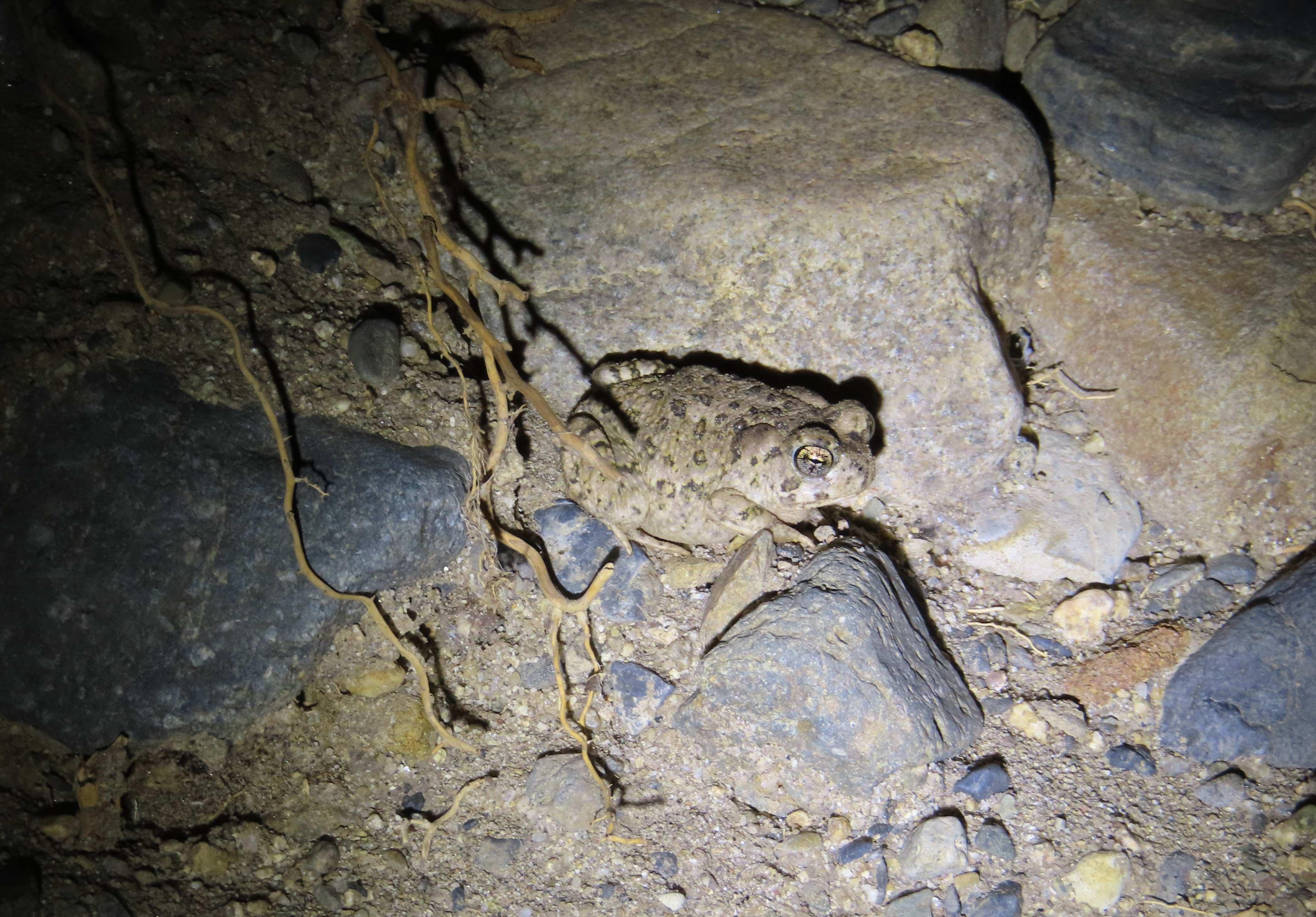
Species Spotlight: Arroyo Toad (Anaxyrus Californicus)
The arroyo toad is a federally endangered species found on The Nature Reserve. Small, stocky, and bumpy, this buff-colored amphibian lives in sandy, cobbly streams with swift currents, shallow pools, nearby sandbars, and adjacent stream terraces.
Adult arroyo toads are mostly nocturnal and spend the day in burrows 2 to 4 inches deep. At night, they emerge to moisten their skin and to find prey , often covering a wide area as they forage. Juveniles and tadpoles are mostly active during the day, while juvenile toads hide in 1- to 2-inch-deep burrows at night to avoid predators.
Arroyo toads breed in slow-moving streams with shallow pools and nearby sandbars. Outside the breeding season, they live in upland habitats such as sycamore-cottonwood woodlands, oak woodlands, coastal sage scrub, chaparral, and grassland. The Nature Reserve has preserved all breeding locations within the Habitat Reserve and 63% to 97% of suitable habitat across different areas of the reserve.
This year, monitoring of arroyo toads is taking place as part of our management and monitoring program. Two of three surveys have been completed so far. Initial results show low surface water earlier than in previous years. Breeding, which requires sufficient rainfall and appropriate nighttime temperatures, likely began in February, earlier than documented in the past. Lower counts of larvae and egg strings have been documented. There is evidence that some tadpoles were successful in transitioning to toadlets however, some tadpoles likely did not reach or complete metamorphosis due to the reduced surface waters. We will continue to monitor this species with results documented in the 2026 Management and Monitoring Report. View previous Annual Reports HERE.