
Laura’s Line: Fall 2025 California Rapid Assessment Method (CRAM)
I have previously written that the purpose of biological monitoring on the Nature Reserve is to detect change over time according to a methodology that produces statistically valid results. Many of you know that the Nature Reserve is managed and monitored according to the Southern Subregion Habitat Reserve Management and Monitoring Program as further defined in the 5-year Management Action Plans (MAPs). Currently we are implementing the 2024-2029 MAP which requires our wetland/riparian habitats be assessed on a three year monitoring interval. This interval was determined to be the appropriate time frame to detect observable changes in habitat condition.
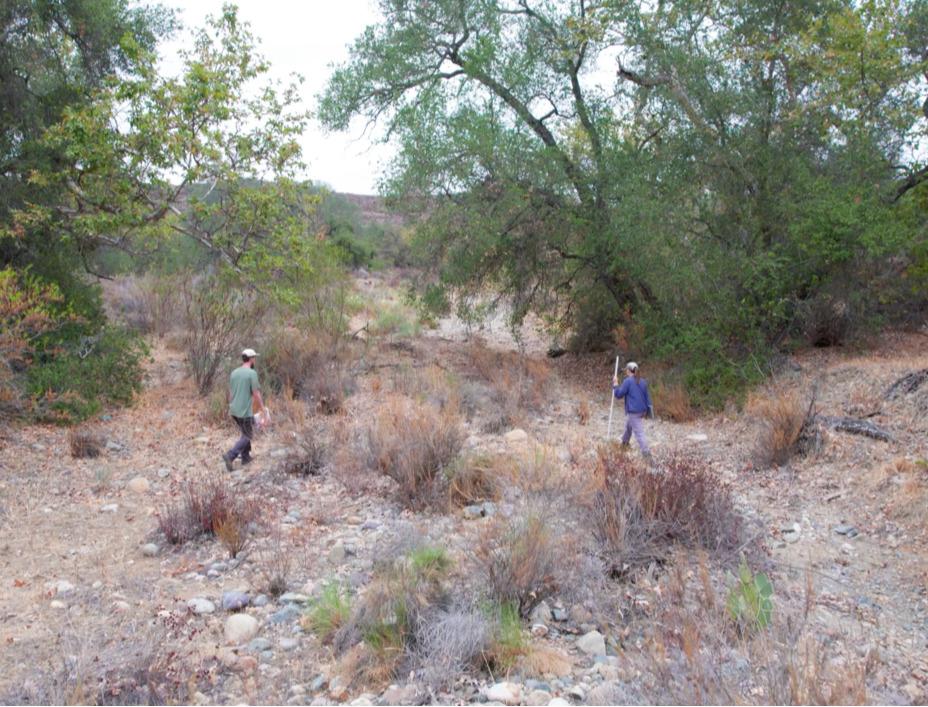
The methodology we use is called the California Rapid Assessment Method (CRAM). CRAM uses a rigorous scoring protocol to assess riparian condition based on four attributes: buffer and landscape context, hydrology, physical structure, and biotic structure. This method is used across California by many land managers and is favored by agencies such as the U.S. EPA and California State Water Resources Control Board. As I write this article, we are finishing assessing 22 stream segments - see and hear our CRAM experts in this video linked here. We will compare our 2025 results to results from 2022, 2019, 2016 and 2013. This analysis will help us determine whether we are meeting our biological goal and objective for the riparian/wetland (RW) vegetation community.
Goal RW1. Maintain a dynamic riparian/wetland system that reflects the existing diversity and distribution of flora and fauna across the Habitat Reserve.
Objective RW1.2. Maintain high level of health of riparian/wetland throughout the Habitat Reserve, including diverse species composition, habitat structure, and adequate recruitment to maintain natural successional processes. Manage potential riparian/wetland stressors, including fire, altered hydrology, water quality, invasives, cattle-related effects, and other anthropogenic effects.
To view our Annual Management and Monitoring Reports, please visit our website here.